
AI Visibility Ranking Systems 2026: How ChatGPT vs Google Search, GEO & AEO Rank Brands
AI visibility in 2026 is no longer a black box. Brands are ranked by AI systems based on entity clarity, citation consistency, crawlability, and geo-local grounding; keyword research is still important for SEO, but to gain visibility in ChatGPT, Perplexity, Gemini, and AI Overviews brands must optimize machine-readable data, authoritative third-party mentions, and localized trust signals across regions.
Brand visibility: ChatGPT vs Google Search (quick contrast): Google Search still surfaces ranked links and AI Overviews grounded in the search index; ChatGPT synthesizes consensus across sources into a conversational answer. Winning Google rankings helps Gemini/AI Overviews more directly; winning ChatGPT often requires third-party agreement and consistent entity mentions. Measure both with AI Share of Voice—do not assume one channel predicts the other.
Table of content:
- 1. The Architecture of AI Visibility: How LLMs "Understand" Your Brand
- 2. The Geo-Local Factor: Why AI Answers Change by Country
- Key Takeaways:
- Frequently Asked Questions
1. The Architecture of AI Visibility: How LLMs "Understand" Your Brand
Different AI platforms ingest, verify, and cite information in fundamentally different ways. This is why a brand may dominate Perplexity answers but disappear entirely in Gemini.
ChatGPT (OpenAI): The Consensus Engine
How it works With Search enabled, ChatGPT acts as a consensus builder, synthesizing information from multiple high-authority web sources (often via Bing and proprietary crawlers).
Primary trust signal
- Repeated agreement across authoritative domains
Citation behavior
- Narrative answers
- “Hover - over” citations or a list of sources at the end.
Optimization lever
-
Cross-platform consistency
- If Wikipedia, G2, Trustpilot, Reddit, reviews on ecommerce sites, and analyst blogs align on your positioning, ChatGPT treats it as factual truth.
Key insight: ChatGPT does not reward originality - it rewards agreement.
Google Gemini: The Brand Authority Validator
How it works Gemini is natively integrated into Google’s core search index, giving it preferential access to brand-owned content.
Primary trust signal
- First-party (brand-controlled) sources
Citation behavior
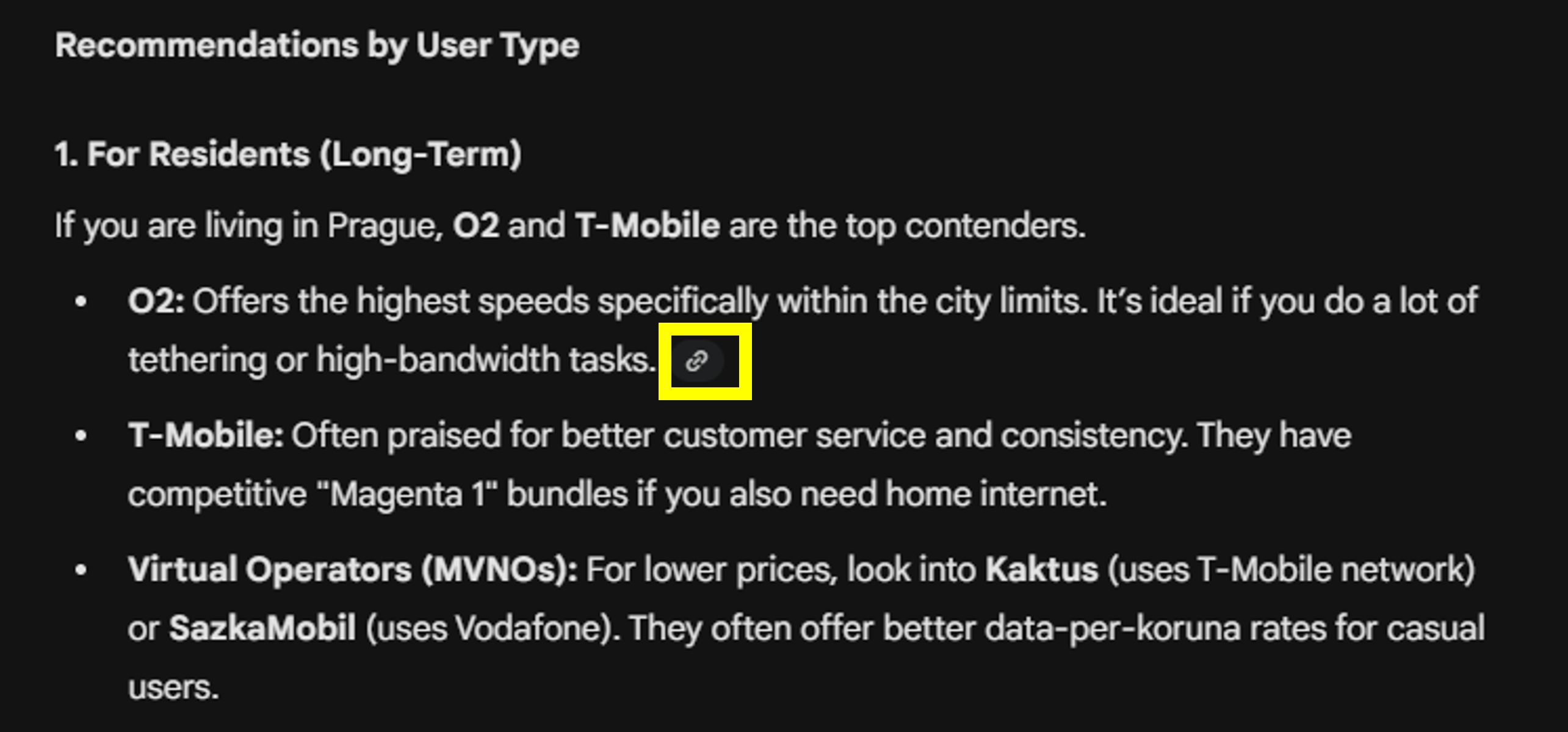
- Navigational links for recommendations and shopping
- Source cards
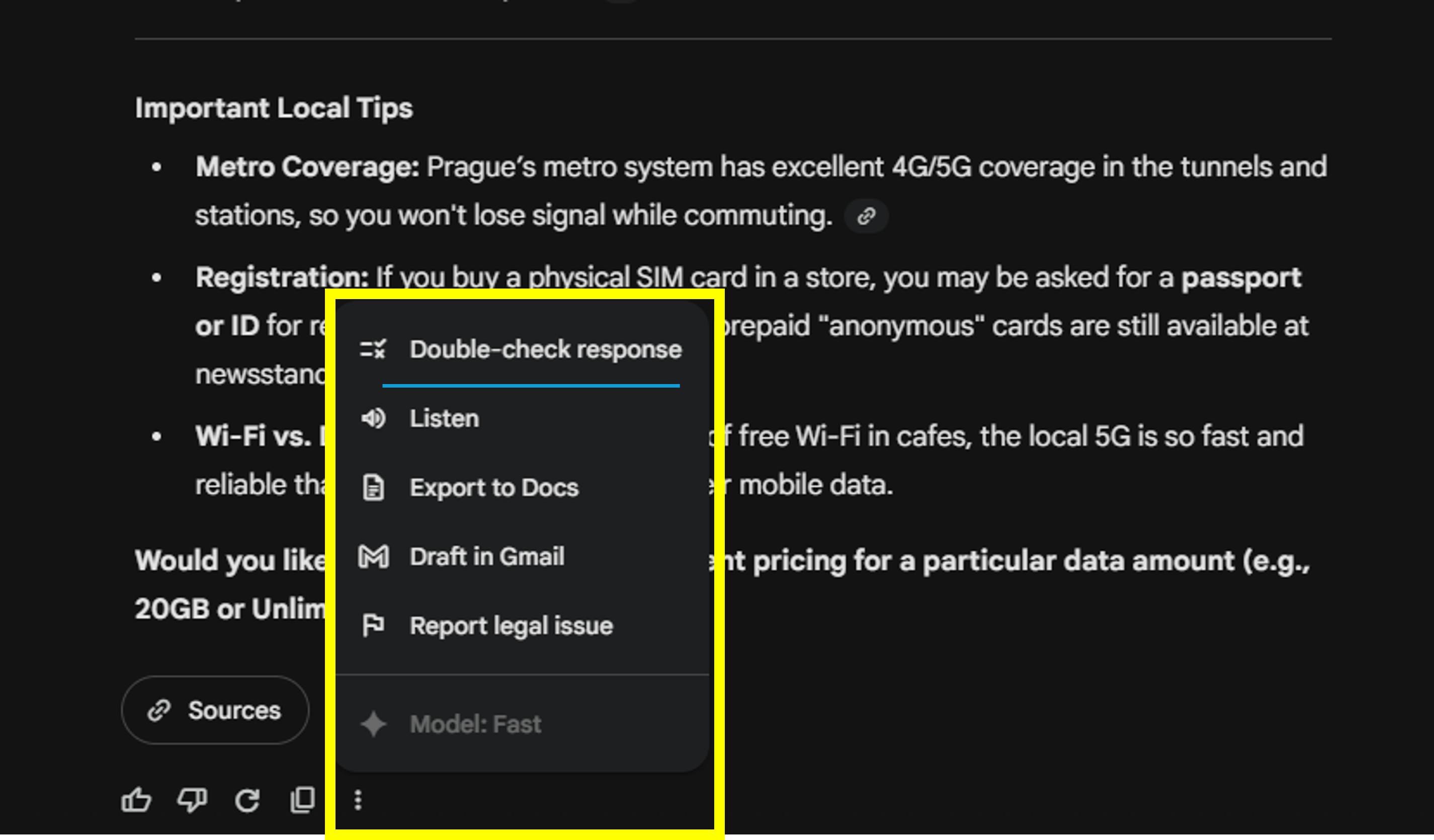
- “Double-check” links to Google Search
Optimization lever
- High-fidelity schema (JSON-LD)
- Actively maintained Google Business Profiles
Key insight: Gemini rewards brands that Google can verify, not just mention.
Perplexity AI: The RAG Specialist
How it works Perplexity is built on Retrieval-Augmented Generation (RAG). It retrieves documents first, then generates answers grounded in those sources.
Primary trust signal
- Demonstrated niche expertise
Citation behavior
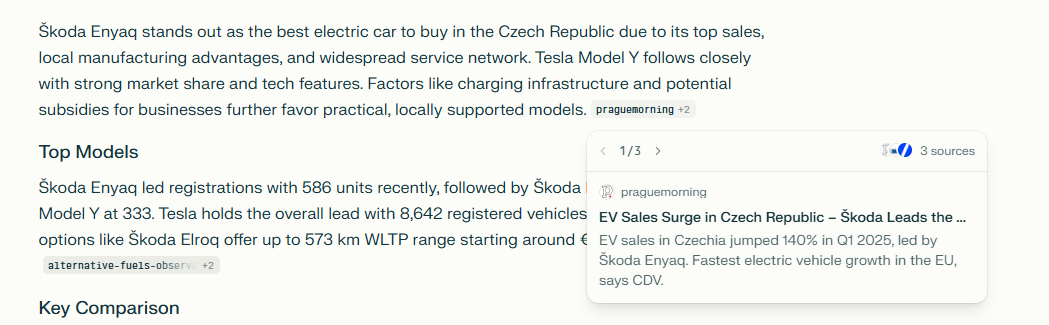
- Inline, sentence-level citations
Optimization lever
-
Long-tail, technical, problem-solving content
- Product docs, comparison guides, and expert explainers outperform brand marketing pages.
Key insight: Perplexity ranks documents, not brands.
2. The Geo-Local Factor: Why AI Answers Change by Country
A common pain point for global CMOs is the discrepancy in brand representation: "Why do I rank #1 for “Best CRM” when I'm in New York, but I'm invisible when my team prompts from London?"
The "IP-to-Prompt" Pipeline
When a user submits a query, AI platforms apply location before generating an answer:
- IP Detection: The platform identifies the user’s IP address.
- Context Injection: Before the LLM generates an answer, the system "injects" the location into the hidden system prompt (e.g., "The user is in San Francisco. Provide local context for “best coffee”.").
- Localized Indexing: The AI’s web search tool fetches results from a localized version of the search index (Google.fr vs. Google.com).
Strategic Implication: AI Visibility Is a Fragmented Map
To win in a specific market (e.g. US, UK, DACH), brands must:
- Maintain LocalBusiness schema
- Ensure NAP consistency (Name, Address, Phone)
- Be cited in region-specific authoritative directories
- Example: Yelp & BBB (US), Yell (UK), Gelbe Seiten (DE)
The Language & Region Bias: "English-First" Data
Even for multilingual brands, the "English-First" bias remains a technical hurdle. Most LLMs are trained on datasets where English accounts for over 80-90% of the data.
- The Internal Pivot: When a user prompts in Spanish, many models internally translate the query to English, find the "Ground Truth" in English sources, and then translate the answer back.
- Optimization Hack: If you want to rank for a non-English query, ensure your translated pages aren't just literal translations but are optimized with local entities (cultural references, local partners) that the AI recognizes as "Native Truth."
Executive Reporting Tip
Because AI answers are localized, AI Share of Voice (AI SOV) must be segmented by region:
- US AI-SOV
- UK AI-SOV
- EU AI-SOV
Anything else is misleading at board level.
Furthermore, how the AI interprets these local signals directly impacts its confidence in recommending you. For a deeper look at how location data influences AI certainty, see our guide on the LLM Confidence Score in Global vs. Local AI Visibility.
3. Measuring Visibility: Tools and Technical Audits
"Do GEO platforms use AI to analyze AI?" The answer is a resounding yes. Monitoring your brand in 2026 requires automated agents that simulate human prompts at scale across different regions.
Tracking Visibility with Seonali
To solve the "black box" problem of AI search, specialized platforms like Seonali have emerged to help brands measure and improve their visibility in real-time.Unlike traditional SEO tools that focus on ranking lists, Seonali analyzes how your brand is cited, recommended, or summarized within generative responses.
- Prompt-Level Monitoring: Seonali generates the exact questions your target personas are asking across ChatGPT, Gemini, AI Overviews, Perplexity, and all major LLM platforms.
- Sentiment & Share of Voice: It provides a granular look at your "AI Share of Voice" and identifies if the AI's tone is helping or hurting your brand reputation.
- Actionable Improvement: By pinpointing "content gaps" where your brand is missing from AI answers, Seonali gives specific recommendations on page structure and earned media opportunities to secure your spot in the next generated summary.
Measure these comprehensive AI visibility metrics for your brand to gain competitive advantage in AI brand visibility.
Key Takeaways:
AI visibility in 2026 is driven by entities, citations, and verification
- Each AI platform has distinct trust mechanics
- Visibility is geo-fragmented, not global
- Measurement requires AI-based monitoring systems
- Technical SEO + schema + third-party consensus = AI authority
Frequently Asked Questions
How do AI platforms like ChatGPT, Perplexity, and Gemini rank brands?
Each AI platform uses different trust signals to rank brands. ChatGPT favors consensus across authoritative third-party sources, Gemini prioritizes brand-controlled content and schema verification, and Perplexity focuses on niche expertise in retrieved documents.
What is the AI impact on brand visibility in 2025–2026?
AI systems increasingly mediate discovery: buyers see recommendations inside ChatGPT, Gemini, Perplexity, and Google AI Overviews before they click. Brands that lack clear entities, citations, and geo-local signals lose share of voice even when classic SEO rankings look healthy.
How does brand visibility differ between ChatGPT and Google Search?
Google Search (and Gemini/AI Overviews) leans on the search index, brand-owned pages, and verifiable schema. ChatGPT leans on cross-source consensus and narrative synthesis. A brand can rank well in Google yet be weakly recommended in ChatGPT—or the reverse—so track both channels separately.
What is the difference between GEO and AEO in AI visibility?
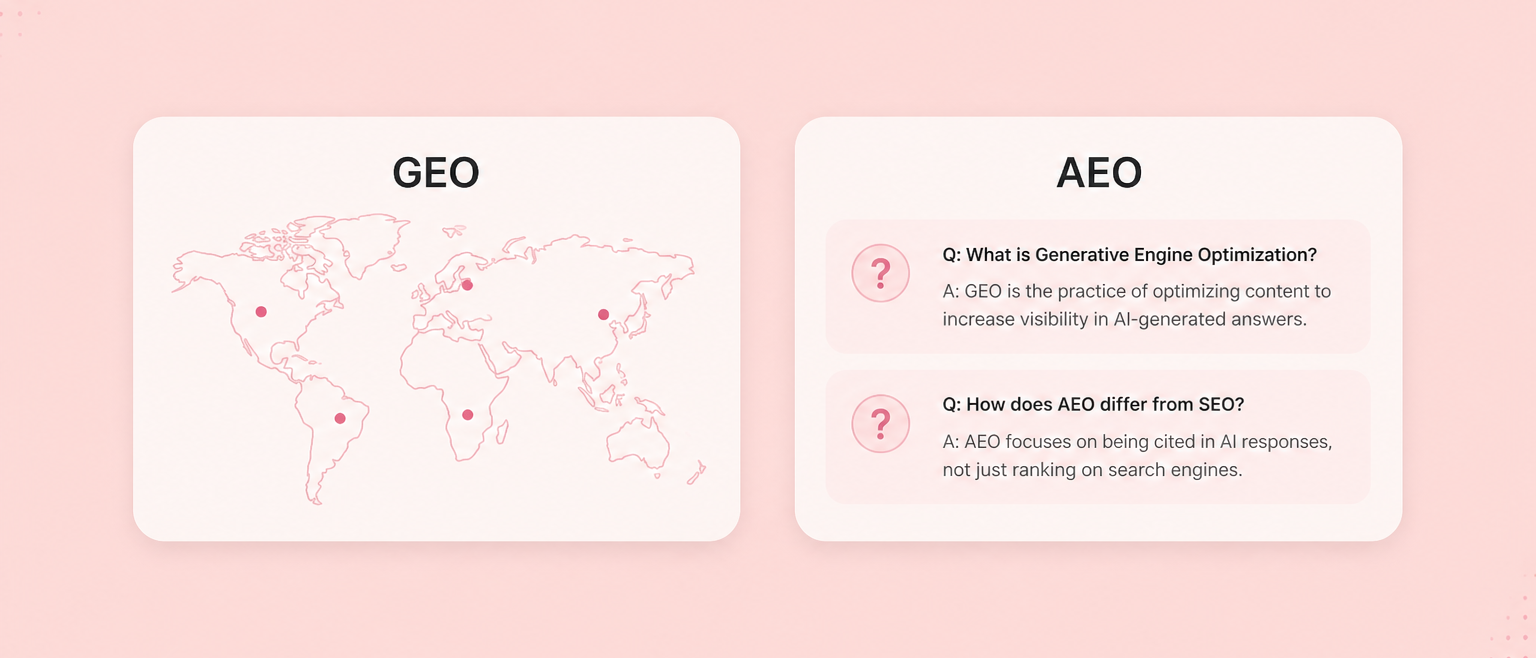
GEO (Generative Engine Optimization) ensures your brand is accurately represented across AI systems using geo signals and local citations. AEO (Answer Engine Optimization) focuses on structuring content so AI engines select your brand as a trusted answer.
Why does AI visibility change by country?
AI systems detect the user’s location, inject it into prompts, and retrieve content from localized search indexes. This causes your brand’s visibility to vary across regions, even for identical queries.
How can brands improve visibility in ChatGPT, Gemini, and Perplexity?
Brands should optimize machine-readable data such as schema, maintain consistent citations across authoritative sources, create region-specific content, align entity mentions across platforms, and benchmark competitors in AI answers.
How important are citations and third-party mentions for AI ranking?
Citations and authoritative mentions are critical. ChatGPT rewards repeated agreement across high-trust sources, Gemini validates content with brand-controlled schema, and Perplexity relies on technical documentation and problem-solving content.
What role does language play in AI visibility?
Most AI models are trained predominantly on English content. For non-English queries, AI systems often translate internally, so localizing content with native entities, cultural references, and local partners is key to ranking in other languages.
How should brands measure AI visibility?
Brands should track AI Share of Voice (AI-SOV) and simulate user prompts across regions using tools like Seonali. Monitoring sentiment, content gaps, and regional performance helps ensure visibility and authority in AI-generated answers—see the measurement playbook.